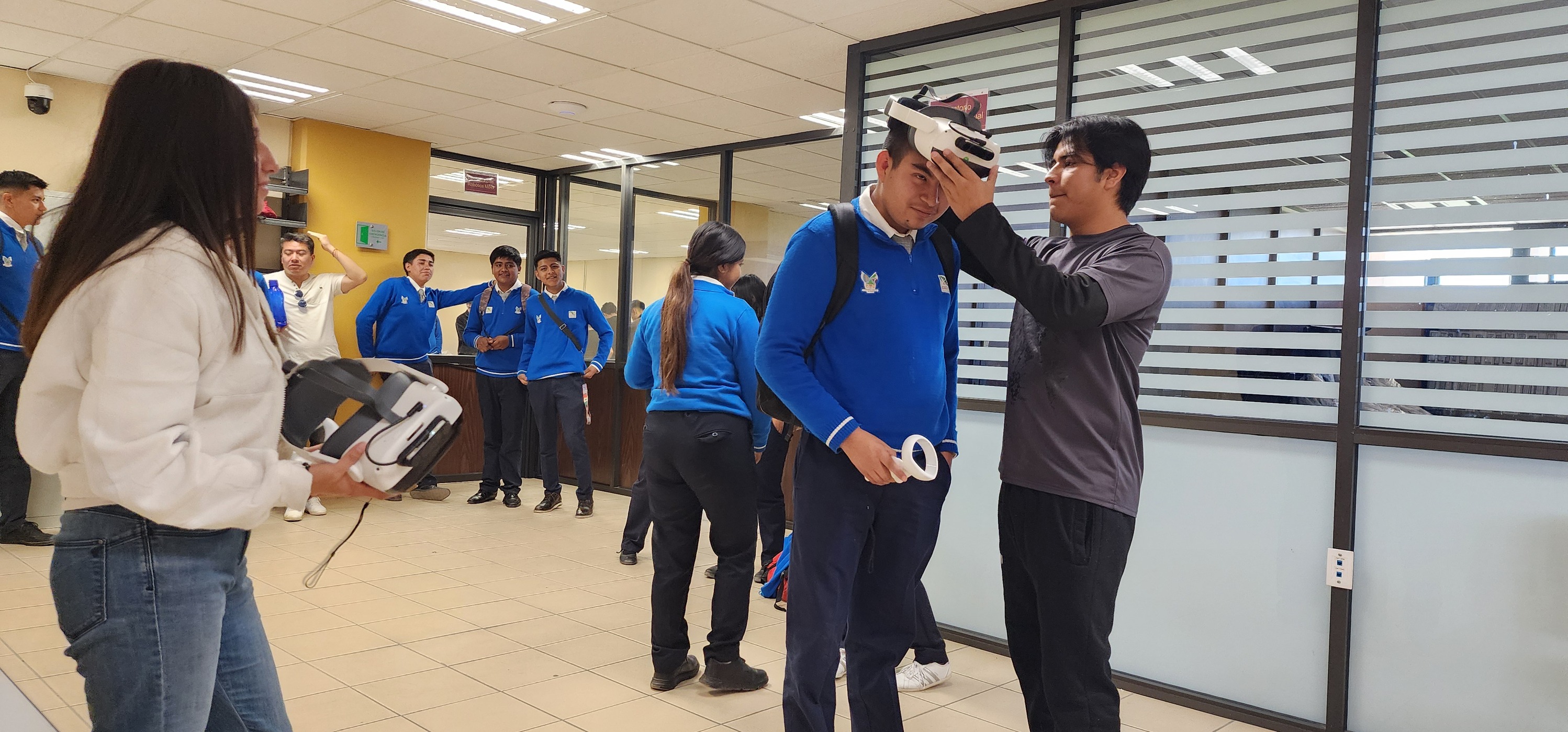
Beyond the Demo
Virtual reality is often presented in education as a novelty: short experiences, isolated demos, or one-time events. That approach misses the real challenge.
The difficulty is not showing VR. The difficulty is deploying it as a functional educational tool, with real students, limited time, shared hardware, and no margin for technical failure.
This article documents the design, setup, and operation of VR sessions using Pico Neo 3 Pro headsets with high school students, focusing on what actually works inside a constrained classroom environment.
Why Virtual Reality in STEM Education
STEM education benefits from experiential learning, but many concepts remain abstract:
- Spatial reasoning
- Systems interaction
- Simulation-based understanding
- Immersive visualization
VR enables students to experience systems instead of imagining them, turning passive explanation into active exploration.
The goal was not entertainment. It was engagement with purpose.
Hardware Selection: Pico Neo 3 Pro
Hardware choice is a deployment decision, not a preference.
The Pico Neo 3 Pro was selected based on practical constraints:
- Standalone operation (no external PC required)
- Fast setup and reset
- Acceptable battery life
- Durability for repeated student use
In educational environments, hardware must tolerate mistakes, quick handoffs, and constant supervision. Anything fragile or overly complex becomes unusable immediately.
Classroom Constraints Are Real Constraints
Unlike controlled lab environments, classrooms impose hard limits:
- Limited physical space
- Short session durations
- High student rotation
- Mixed technical familiarity
Each VR session had to be designed so that:
- Students could enter the experience quickly
- Instructions were minimal and visual
- Supervision was constant but lightweight
If a setup required troubleshooting, it failed by definition.
Deployment in Practice
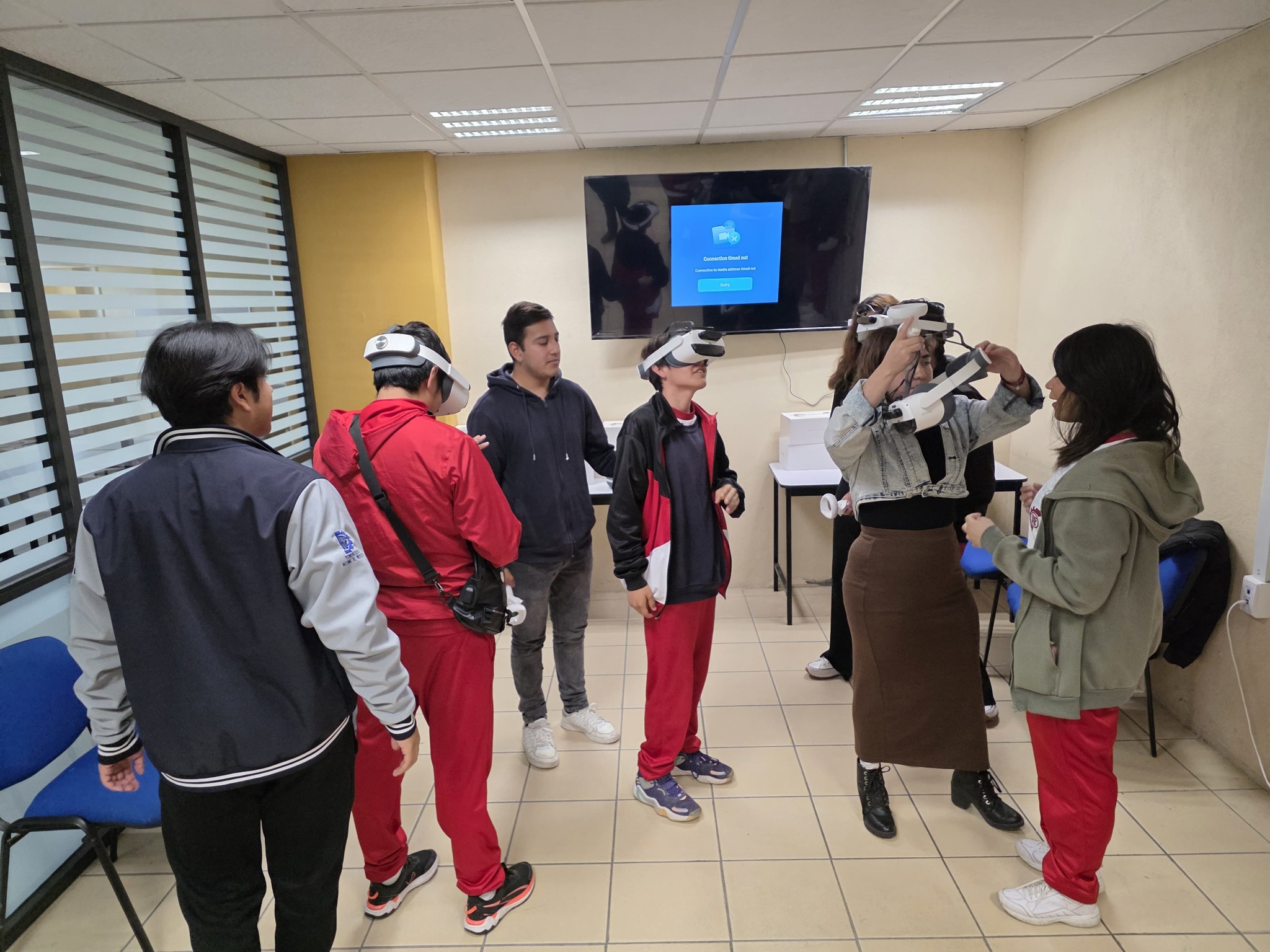
The VR sessions followed a structured flow:
Hardware onboarding
- Proper headset placement
- Comfort and safety check
Guided interaction
- Initial orientation
- Basic controls
- Exploration phase
Short, focused experiences
Rotation
- Clean handoff to the next student
This structure ensured that technology never blocked participation.
Students as the Final Test
High school students are the most honest evaluators of technology.
They do not tolerate friction. They do not wait for explanations that fail. They immediately reveal whether a system works.
In this context:
- Engagement was immediate
- Interaction was intuitive
- Curiosity replaced hesitation
The success of the system was not measured in features, but in how naturally students interacted with it.
What Actually Worked
Several lessons emerged from real deployment:
- Simplicity beats feature richness
- Short experiences outperform long sessions
- Physical comfort matters as much as content
- Instructor presence is essential
Most importantly, VR worked best when treated as infrastructure, not spectacle.
The Real Lesson
Deploying VR in education is not about immersive graphics or advanced simulations. It is about engineering reliability under human constraints.
When VR is designed to survive real classrooms, it becomes more than a demo—it becomes a learning tool.
This project reinforced a core principle of applied engineering:
A system is only successful when it works for its users, not when it impresses its creators.