Beyond Digitization
Digital preservation is often reduced to scanning artworks and uploading images to a website. That approach preserves files, not experience.
Cultural heritage, however, is not static. It is spatial, contextual, and interpretative. Preserving it digitally requires more than storage—it requires system design.
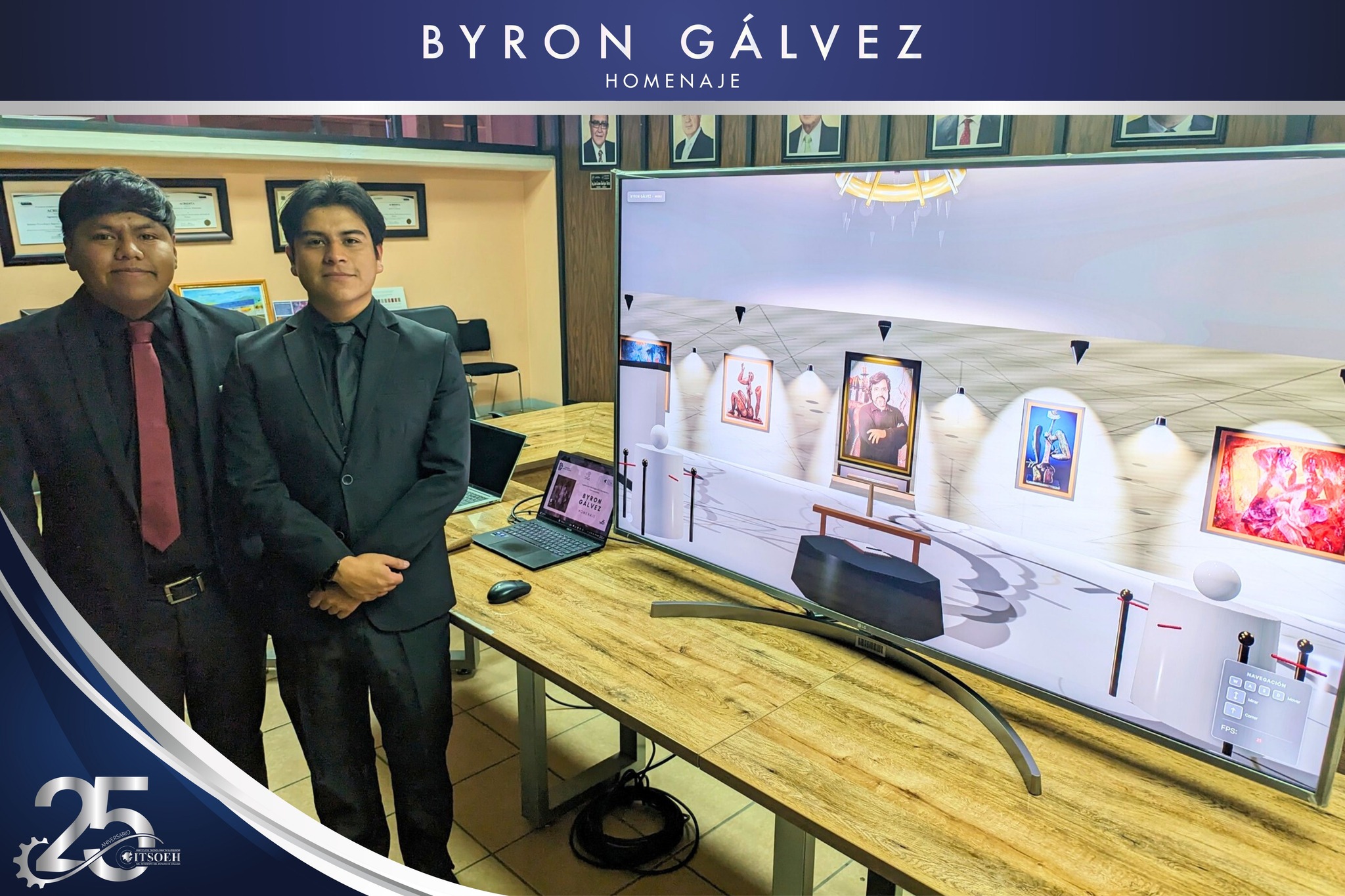
This article documents the engineering and deployment of a virtual museum and dynamic museum system developed to preserve and present the artistic legacy of Byron Gálvez, culminating in a real public exhibition during an official tribute event.
The Problem: Preserving Art Beyond Physical Space
Traditional museums face inherent limitations:
- Physical accessibility (location, schedules, capacity)
- Degradation of artworks over time
- Limited interaction with younger and digital-native audiences
For cultural heritage to remain relevant, it must become accessible, explorable, and adaptable to digital environments—without trivializing the work itself.
The challenge was not artistic digitization, but engineering a system capable of representing art as a living digital space.
System Overview: Virtual Museum + Dynamic Museum
The project was divided into two complementary systems:
1. Virtual Museum
A persistent, web-based 3D environment where users can:
- Navigate a digital gallery space
- Explore curated artworks spatially
- Experience lighting, scale, and composition intentionally
2. Dynamic Museum
A flexible extension designed to:
- Adapt exhibitions dynamically
- Support multiple configurations and narratives
- Allow updates without rebuilding the entire system
Together, these systems form a digital exhibition platform, not a static website.
Engineering Goals
From the beginning, the project was constrained by real-world requirements:
- Web-native deployment (no local installation)
- Performance on consumer hardware
- Non-technical users as the final audience
- Long-term maintainability
These constraints shaped every technical decision.
Architectural Decisions
Key engineering principles guided the implementation:
- Web-based rendering using modern browser capabilities
- Clear separation between content, presentation, and interaction logic
- Lightweight asset management to ensure fast loading
- Explicit interaction models (no hidden controls or gestures)
The system was designed so that users could intuitively explore the space, without instructions or prior experience with 3D environments.
Technology served the artwork—not the reverse.
Designing for Real Audiences
Unlike experimental demos, this system was built for public deployment.
The museum was presented during an official homage event attended by:
- The artist's family
- Media representatives
- Cultural and governmental institutions
- A non-technical general audience
This context imposed a critical requirement:
If the system fails, confuses, or distracts, it fails entirely.
There is no tolerance for debugging during a live cultural event.
Deployment as Validation
The public presentation acted as full system validation:
- The platform ran continuously without interruption
- Users navigated the virtual space without assistance
- The artwork remained the focal point—not the technology
This moment transformed the project from an academic exercise into a deployed cultural system.
Engineering success was measured not by metrics, but by invisibility: the technology worked because it disappeared behind the experience.
Interdisciplinary Engineering in Practice
This project sits at the intersection of:
- Software engineering
- Human–computer interaction
- Digital heritage preservation
- Systems design
It required translating artistic intent into technical constraints, and technical constraints back into experiential design.
That translation layer is where most projects fail—and where engineering discipline matters most.
The Real Lesson
Digital preservation is not about copying the past into new formats. It is about designing systems that allow culture to persist, evolve, and remain accessible.
This project demonstrated that:
- Cultural heritage can be engineered responsibly
- Web technologies are mature enough for serious preservation work
- Real validation happens in public, not in documentation
- Engineering, when done correctly, becomes an invisible bridge between art, history, and future audiences