Beyond Prototypes
Artificial intelligence in education is often framed as experimentation: chatbots, demos, isolated tools. That framing misses the real challenge.
Educational systems do not need more prototypes. They need reliable, ethically designed systems that can operate at scale, under institutional constraints, and with real social responsibility.
This article documents the design and institutional presentation of an AI-based educational support agent, alongside a broader vision for STEM, VR, and robotics laboratories as integrated educational infrastructure.
The Core Problem: Access and Saturation
Educational environments face a structural limitation:
- Limited access to psychological support
- Overloaded professionals
- High student-to-specialist ratios
- Growing demand for early detection and guidance
This is not a problem of awareness. It is a problem of capacity.
The goal was not to replace human professionals, but to design a system that could:
- Provide first-level support
- Assist in screening and guidance
- Operate continuously
- Respect ethical and institutional boundaries
System Overview: The Educational Support Agent
The educational support agent was designed as an assistive AI system, not an autonomous authority.
Key principles:
- Support, not diagnosis
- Guided interaction, not free-form therapy
- Clear scope limitations
- Human escalation paths
The system focuses on structured interaction, emotional state indicators, and contextual guidance—acting as a bridge, not a replacement, between students and professional support services.
Designing Under Ethical Constraints
Unlike many AI applications, this system was constrained from the start by ethical and institutional requirements:
- No medical diagnosis
- No hidden decision-making
- No opaque model behavior
- No data misuse
Every design decision was evaluated under one question:
Can this system be responsibly deployed in a public educational institution?
If the answer was unclear, the feature was discarded.
Institutional Presentation as a Design Test
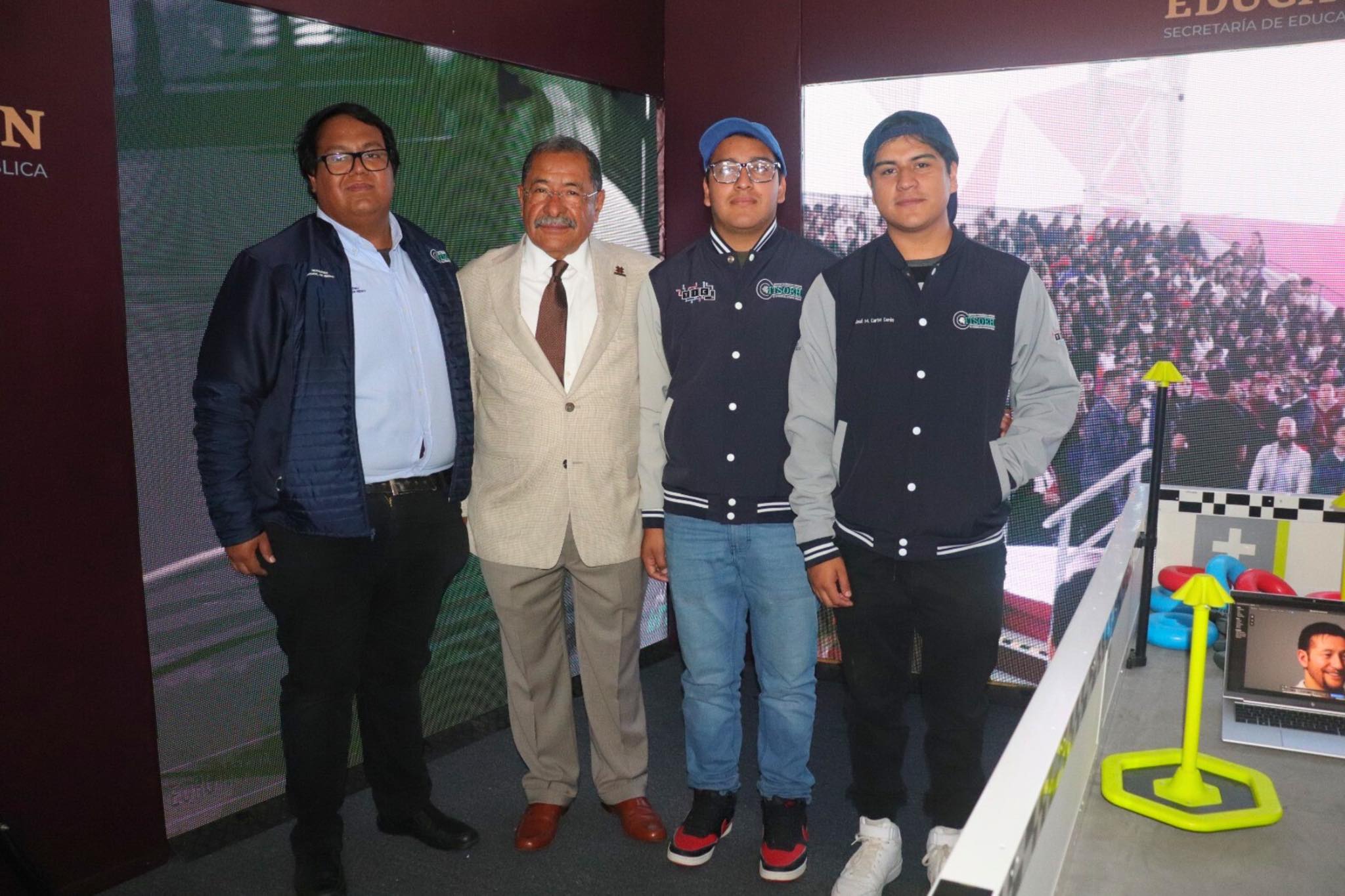
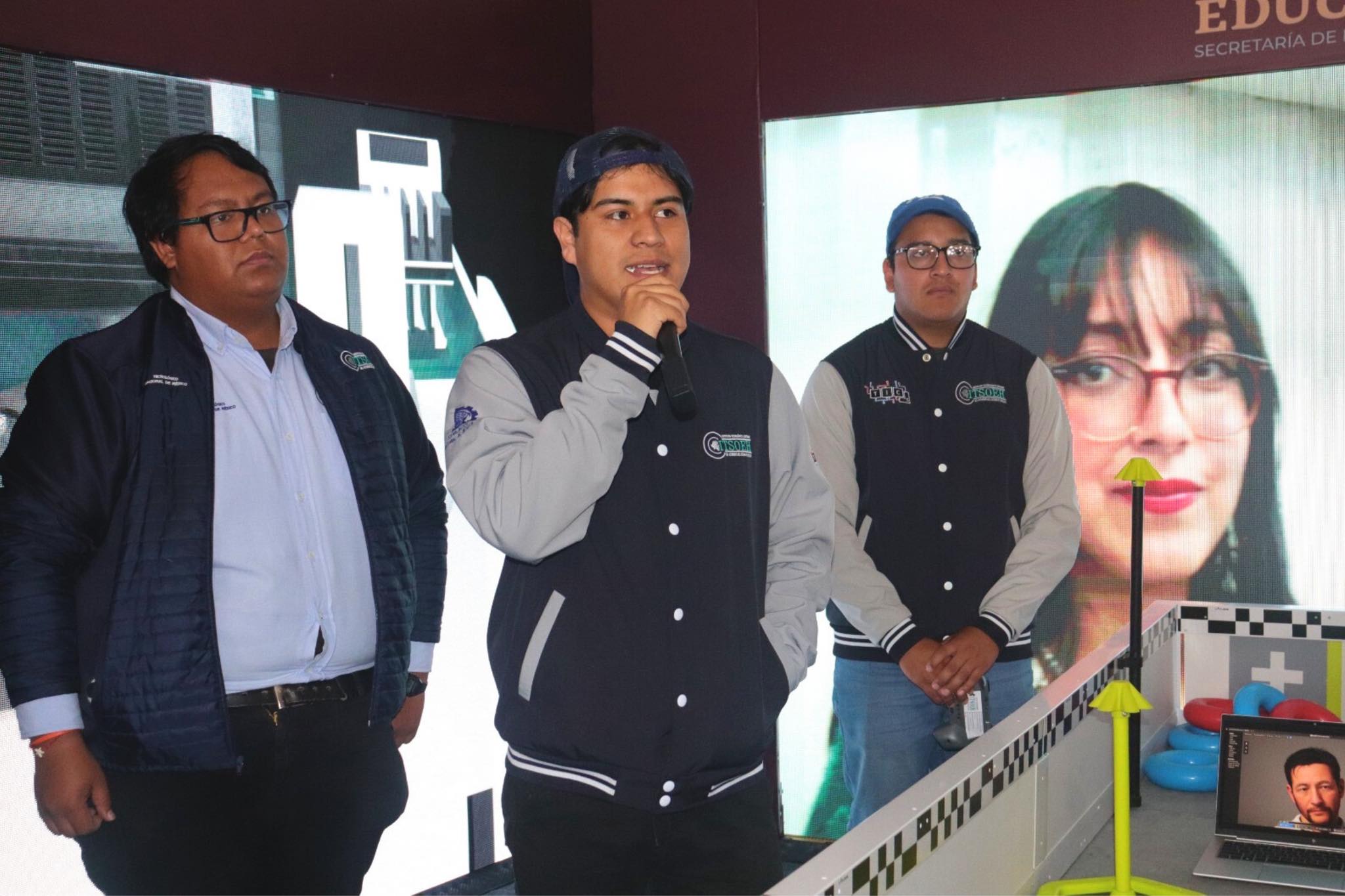
The system and its broader vision were formally presented to educational and governmental stakeholders, not as a finished product, but as a systems proposal.
This context matters.
Presenting AI to institutions forces clarity:
- You must explain what the system does
- You must define what it explicitly does not do
- You must justify why it should exist at all
This process validated not just the technology, but the thinking behind it.
Beyond a Single System: Infrastructure Thinking
The educational support agent was intentionally framed as one component of a larger ecosystem.
The long-term vision included:
- STEM laboratories for applied learning
- Virtual reality environments for immersive education
- Robotics labs for hands-on engineering experience
The unifying idea was simple: AI should not be an isolated application—it should be part of educational infrastructure.
Engineering for Public Systems
Designing AI for public education differs fundamentally from private or experimental contexts:
- Scalability matters more than novelty
- Explainability matters more than performance metrics
- Stability matters more than rapid iteration
A system that cannot be understood by administrators, educators, and students alike cannot be responsibly deployed, regardless of its technical sophistication.
The Real Lesson
Applied AI in education is not about building impressive systems. It is about designing boundaries.
This project reinforced a central insight:
The most important feature of an AI system is knowing where it must stop.
When AI is treated as infrastructure rather than spectacle, it becomes possible to design systems that are ethical, scalable, and genuinely useful.
That is where engineering responsibility begins.