Beyond Predictive Maintenance
Industrial robotics is a cornerstone of modern manufacturing, but it hides a fragile reality: a single unexpected failure can stop an entire production line.
Robot arms are complex electromechanical systems. Bearings, gears, motors, and joints operate under continuous stress. When even a low-cost component fails in a critical joint, the consequence is not minor degradation — it is full operational downtime.
This project explores the design and academic validation of an AI-driven predictive health twin for industrial robot arms, focused on anticipating failures before they propagate into costly shutdowns.
The Core Problem: Downtime Is the Real Cost
The primary challenge is not detecting faults after they occur, but predicting degradation early enough to act.
In industrial environments:
- Downtime costs can reach millions of dollars per hour
- Failures often appear suddenly, despite long periods of normal operation
- Traditional maintenance schedules are either too conservative or too late
The problem is not a lack of data, but the lack of actionable intelligence derived from it.
System Overview: The Health Twin Concept
The project proposes an AI-powered digital health twin for robot arms, combining:
- Continuous sensor data acquisition (IoT)
- Machine learning–based anomaly detection
- Remaining Useful Life (RUL) estimation
- A digital representation of joint-level health
Rather than monitoring the robot as a single entity, the system models each critical joint as a health component, allowing localized predictions and targeted maintenance actions.
This shifts maintenance from reactive or schedule-based to condition-based decision making.
Designing Under Real Constraints
This system was designed under constraints typical of academic and early-stage industrial environments:
- Limited computational resources
- No access to large-scale cloud infrastructure
- Heterogeneous robot platforms
- No tolerance for black-box decision making
These constraints forced design choices that favored:
- Lightweight models over large architectures
- Interpretability over raw accuracy
- Robustness over experimental novelty
The goal was not to maximize benchmark scores, but to ensure deployability and trust.
Academic Validation and External Review
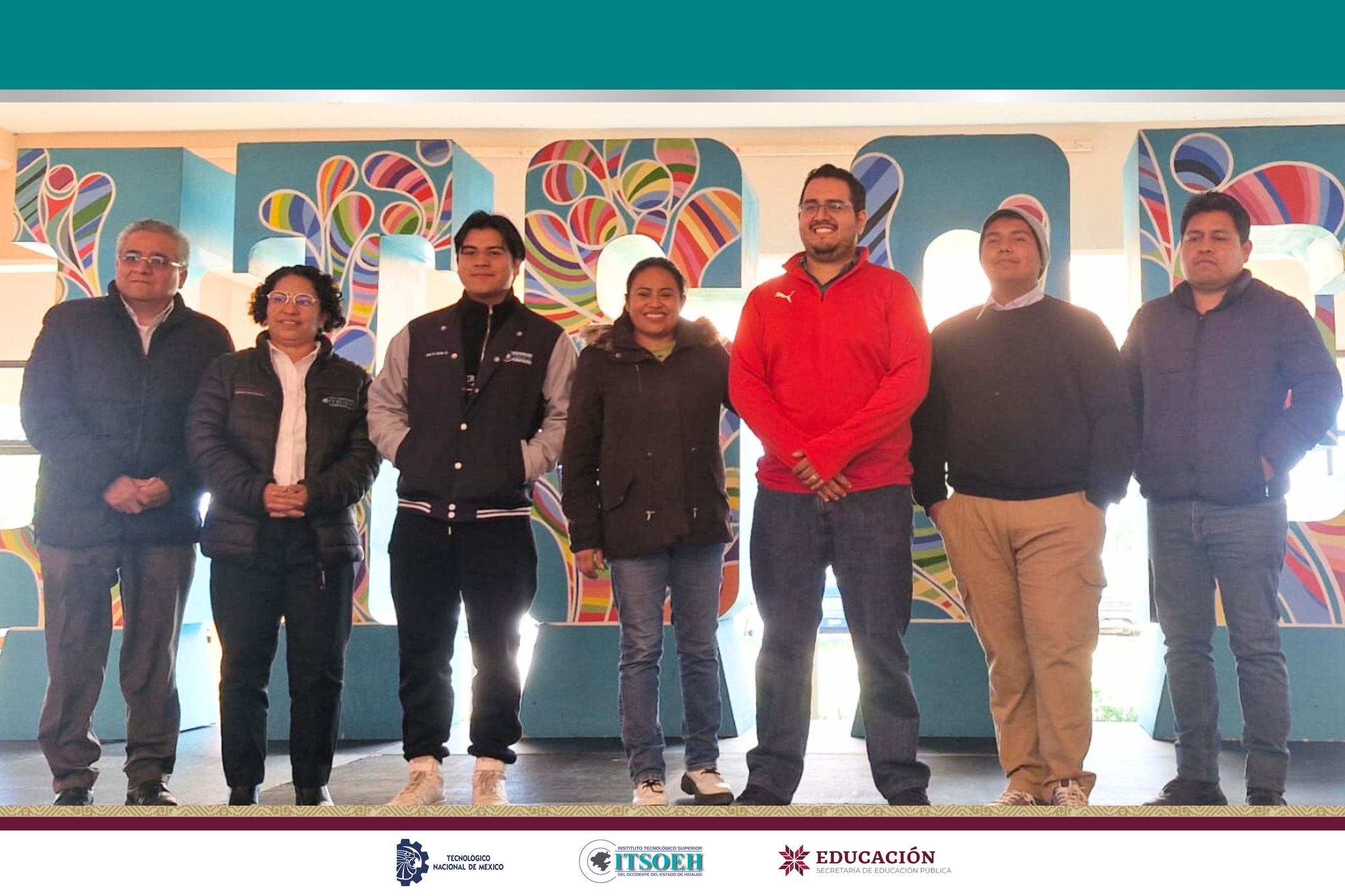
As part of the project lifecycle, the system and its architectural decisions were reviewed during an academic validation visit by Dr. Izhar Oswaldo Escudero Ornelas from Xi'an Jiaotong-Liverpool University.
The validation focused on:
- Technical coherence between data, models, and objectives
- Feasibility of deployment in industrial settings
- Alignment between predictive outputs and real maintenance actions
- The balance between research depth and engineering practicality
This step was critical: validation was not limited to model performance, but extended to system viability beyond the academic context.
From Research to Guaranteed Uptime
A key outcome of the validation process was reframing the system's value proposition.
The system does not sell software. It sells operational uptime.
By predicting failures before they occur, the health twin enables:
- Planned maintenance instead of emergency repairs
- Reduced spare-part inventory costs
- Extended component lifespan
- Increased operational reliability
In this sense, AI becomes an operational guarantee, not a feature.
Business and Deployment Perspective
The system architecture naturally supports a Software-as-a-Service (SaaS) model:
- Subscription per robot arm
- Tiered capabilities:
- Real-time monitoring
- Predictive alerts and RUL estimation
- Automated work orders and optimization insights
- Hardware integration (sensor kits) complements the software layer, enabling end-to-end deployment without deep modifications to existing robotic systems.
This model aligns technical feasibility with economic sustainability.
The Real Lesson
This project reinforced a fundamental principle of applied AI:
A useful system is not defined by how advanced it looks, but by how reliably it prevents failure.
Academic validation, industrial constraints, and engineering discipline converged into a single insight: AI systems only matter when they change decisions before problems occur.
Designing for that reality requires less hype — and far more systems thinking.