Beyond Writing Code
Programming competitions are often misunderstood as speed-coding events. They are not.
What they actually test is the ability to think clearly under constraints: limited time, incomplete solutions, and constant pressure to adapt.
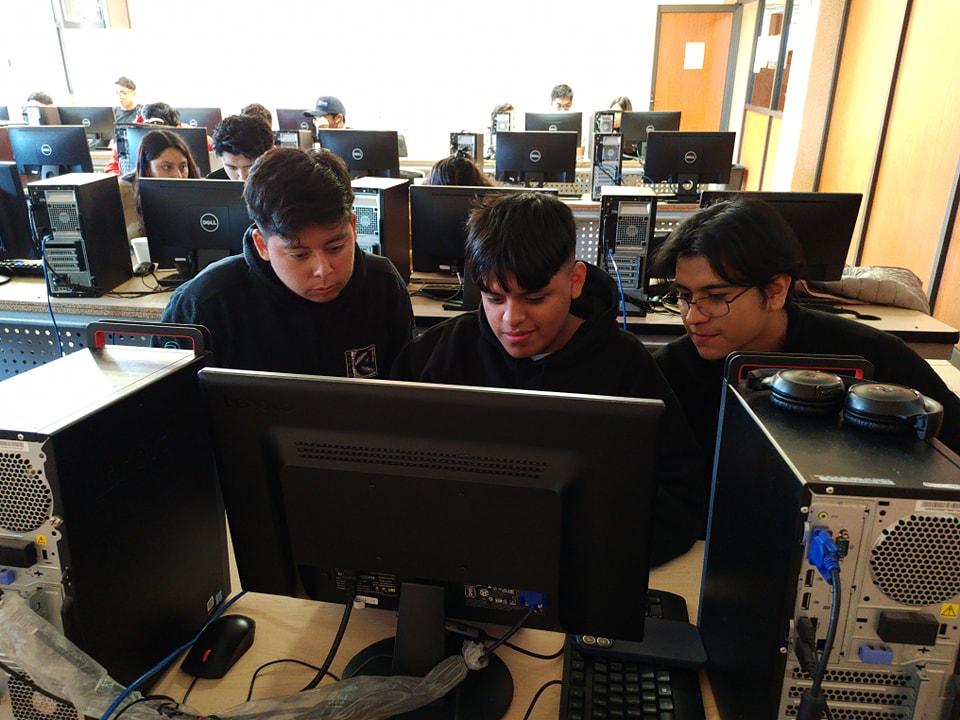
This article documents participation in a competitive programming event (Coding Cup), an environment commonly associated with large-scale industry practices and problem-solving culture promoted by organizations such as Google.
What Programming Competitions Really Measure
Unlike classroom exercises, competitive programming environments remove most external structure. There are no step-by-step instructions, no partial credit for intent, and no guarantees that a solution exists within familiar patterns.
Instead, participants are evaluated on:
- Problem decomposition
- Algorithmic reasoning
- Time and space complexity awareness
- Collaboration and communication
- Emotional control under time pressure
Code is just the final artifact of a much deeper cognitive process.
Team-Based Problem Solving
Although problems are solved individually at the keyboard, competitive environments quickly become collaborative thinking spaces.
During the contest, teams naturally divide roles:
- One person focuses on understanding the problem statement
- Another explores potential algorithms or edge cases
- Another validates complexity and feasibility
This mirrors real engineering environments far more closely than isolated assignments.
Constraints as the Core Feature
The defining characteristic of the Coding Cup experience was constraint:
- Strict time limits
- Fixed computing resources
- No external references
- Immediate feedback (correct or wrong)
These constraints force participants to abandon perfectionism and focus on progressive refinement—a critical engineering skill rarely taught explicitly.
Learning That Cannot Be Simulated
No lecture replicates what happens when:
- A solution fails five minutes before the deadline
- An algorithm works conceptually but times out
- A minor edge case invalidates an entire approach
These moments create durable learning because they combine technical reasoning with emotional stakes.
Participants leave with a clearer understanding of their own strengths, weaknesses, and decision-making patterns.
From Competition to Engineering Practice
The value of competitive programming is not winning.
Its real value lies in developing habits that transfer directly to professional software engineering:
- Reading ambiguous requirements carefully
- Choosing acceptable solutions under imperfect conditions
- Communicating ideas efficiently
- Managing cognitive load
These skills matter regardless of language, framework, or domain.
The Real Lesson
Programming competitions are not about proving who knows more syntax. They are about discovering how you think when conditions are unfavorable.
This experience reinforced a fundamental principle:
Strong engineers are not defined by ideal conditions, but by how they operate when time, clarity, and certainty are all limited.
That lesson persists long after the contest ends.